
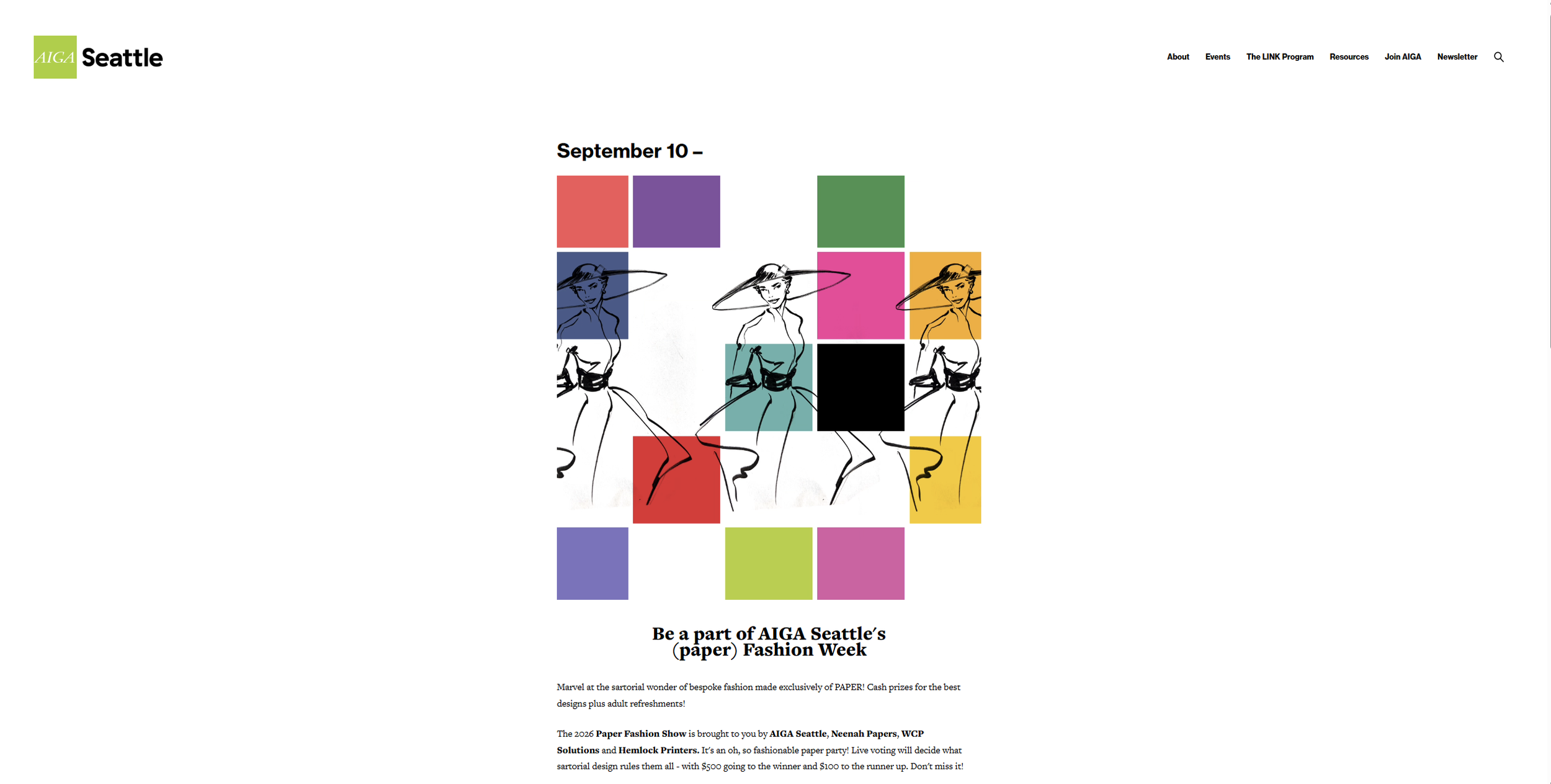
A few weeks ago, I scrolled through local marketing and design organization sites looking for events to attend. I'd been feeling quite disconnected from everything lately, especially after my first attempt at an East Coast relocation. I decided to see what was going on with AIGA Seattle, even though I let my membership expire a few years before COVID. To my surprise, its homepage highlighted an upcoming event, the Paper Fashion Show. I was intrigued. Reading further, I learned it was a competition challenging creatives to design a look for a fashion show made entirely with paper products. I added the event to my private calendar, now called Sequin Soirée, to check back for more details.
A few weeks later, they set a date (Thursday, September 10), and I bought my $20 ticket. And then nothing. No additional details about the event agenda, featured contestants, behind-the-scenes, or even parking information. Nothing. But I decided to go anyway. Until I remembered how drained I feel at the end of my workdays. I fully intended to drive straight from the office in Bellevue to downtown Seattle until about 4 pm. By then, my brain was mush as I tried to push through my last hour of work, and all I wanted to do was go home and lie down. So that's what I did. I skipped the event to go home and rest.
But it got me thinking, "Would I have pushed through and just showed up if I had more information about what was going to happen at the event?" I don't know about you, but usually before I commit to attending anything, I need to know everything: the location, the parking situation, the event agenda, and, most importantly, who all gon' be there. I made an exception for this event because I was trying to ease back into the fall fashion season, after ten months of hibernating while unemployed. But one trade-off of enjoying a steady income is the lack of energy to do anything else during the week, especially if it involves meeting new people and carrying on full conversations. That's when I realized attending the event was more about anticipation than my energy level.
The Event Experience Starts Before You Walk Through The Door
The Paper Fashion Show sounded pretty interesting... on paper. Contestants use paper products to create unique fashion designs and put them on a runway. But once I purchased my ticket, the marketing essentially stopped. Honestly, had I not been searching for events on my own, I probably wouldn't have known this event was happening.
I had questions.
Who was participating?
Were they limited to specific design styles?
Had they hosted this event before? If so, what did those designs look like, and who won?
Who's judging the competition?
What are the judging criteria?
How long would the runway show last?
Where's the closest parking garage?
Can I walk into the building, or do I need to check in with someone?
What makes this event worth attending for guests?
And I'm not suggesting that an event needs to reveal every surprise before opening the doors. Still, there's a difference between preserving a surprise and leaving your audience without enough information to understand the value of attending. In this case, I had to do the work of maintaining my own interest in attending the event, which clearly didn't work out.
Logistics Reduce Anxiety, but Anticipation Creates Desire
There's an important distinction between telling someone how to attend an event and giving them a reason to want to attend. Of course, prospective attendees need the practical information (location, timeframe, parking, costs, etc.), but logistics alone don't create excitement; they reduce uncertainty. Anticipation is the key to building a connection between the event and the attendees' interest.
For an event like the Paper Fashion Show, there were so many opportunities to build anticipation without giving away the experience. Highlight the contestants and a mood board of their inspiration, give us a glimpse of the approved materials, introduce the judges, mention the sponsors, and encourage guests to use paper products in their event outfits... Help the attendees participate in the event.
Event marketing often gets too focused on getting people to RSVP, but the real focus should be on getting people excited to show up. In the past, I've been guilty of finding interesting events to attend, purchasing tickets, and then deciding not to show up because my interest faded without consistent reminders of why I purchased the ticket in the first place.
Time and Energy Are Part of the Ticket Cost
That's what happened here. By the time the day of the show came, I was doing the mental math of how long it would take me to find somewhere to park after driving from Bellevue to downtown Seattle, how long I'd want to stay before making a strategic exit, how long it would take me to find street parking when I got home, etc. The event became a hurdle; one more thing competing for my limited time and energy. Even though the event ticket was only $20, the opportunity cost of spending a Thursday night at an event instead of going home and completing my evening routine was too expensive.
As marketers, we can look at an event on a calendar and see a $20 ticket, but attendees see the entire equation: event attendance = money + time + transportation + energy + opportunity cost. The higher the other costs become, the more important it is to communicate the value of the experience.
Who Is the Marketing Actually Talking To?
Another angle I kept thinking about was that an established organization hosted the event and already had a community. If you're already an AIGA Seattle member, or you've attended this type of event before, you may have had a completely different level of familiarity than I did. Maybe people in the community already knew what to expect from the show. But people on the outside, like myself, didn't have any of that context. I just stumbled across the event on the AIGA website.
As organizations try to grow beyond their existing membership to reach new audiences by hosting public events, it's important not to assume everyone seeing the event knows what your existing audience already knows. People discovering your events for the first time need a reason to care and enough context to understand what they're signing up for. In my case, the event premise was enough to get my attention, but not enough to sustain it.
So What Would I Have Done Differently?
I would organize a tight two-week campaign via email and social media to make sure everyone has the same information. For confirmed attendees, I'd send the details straight to their inbox. For people interested in events that combine fashion and art, social channels encourage the right people to buy a ticket and show up.
Email Campaign
Immediately after ticket purchase: Thank the attendee for purchasing a ticket, share event logistics, encourage them to follow on social channels.
14 Days Before: Venue information: why the event is being hosted there + Sponsor information: sponsor representatives share why they're excited to participate in the event
11 Days Before: Event Context: why AIGA Seattle is hosting this event
9 Days Before: Meet the Designers: share brief bios of contestants with links to their websites and social channels
6 Days Before: Behind-the-Scenes: share mood boards of select contestants highlighting the inspiration for their designs
3 Days Before: Meet the Judges: highlight the judges and what they're looking for + explain official judging criteria
Day of Event: Share details about how to get to the location (parking, entering the building, elevator access, check-in details)
Social Media Campaign
14 Days Before: A video walking through the venue, highlighting the exterior, how to enter the building, elevator access, and the event space.
12 Days Before: A carousel post highlighting a sponsor and how they're contributing to the event
10 Days Before: An image post of the previous event's winner
8 - 4 Days Before: Carousel posts highlighting the contestants and their inspiration mood boards
3 Days Before: A carousel post highlighting the judges
Day of Event: A video featuring the team setting up for the event and details about last-minute ticket information
The marketing strategy should continue building the event story by helping attendees build familiarity with the organization, the venue, the designers, the sponsors, the judges, and the overall vibe, so they have a reason to want to be in the room.